


Dans le choix d'une technologie de télémétrie laser, la longueur d'onde est le facteur clé qui détermine les limites de performance, les niveaux de sécurité et l'adéquation au scénario. Au départ, de nombreux utilisateurs se concentrent uniquement sur des paramètres de surface tels que la portée et la précision, tout en négligeant l’impact sous-jacent de la longueur d’onde. Au mieux, cela entraîne une réduction drastique de la portée par temps de pluie ou de brouillard, ainsi que de fréquentes fausses alarmes dans des environnements complexes. Au pire, cela présente des risques pour la sécurité oculaire, voire empêche l’obtention des certifications de conformité industrielles.
À l'heure actuelle, les trois longueurs d'onde les plus couramment utilisées dans le monde pour la télémétrie laser sont 905 nm, 1 064 nm et 1 535 nm. Elles présentent des différences significatives en termes de caractéristiques optiques, de sécurité, de coût et de cas d'utilisation. Il est donc essentiel de choisir la bonne longueur d'onde pour tirer le meilleur parti de votre équipement.
I. Laser à semi-conducteur de 905 nm : un choix économique pour les courtes distances (jusqu'à 3 km)
Caractéristiques optiques principales
- Tout d'abord, ce laser repose sur une technologie de laser à semi-conducteur éprouvée, qui s'appuie sur une chaîne industrielle bien établie. Il se caractérise donc par un faible coût, un format compact et une faible consommation d'énergie.
- De plus, il émet une lumière invisible dans le proche infrarouge et offre une réponse rapide, ce qui le rend adapté aux mesures à haute fréquence.
- Cependant, il subit une atténuation atmosphérique relativement importante. Par conséquent, sa portée diminue sensiblement en cas de pluie, de brouillard ou de poussière.
- Par ailleurs, la plupart des produits répondent aux critères de sécurité oculaire de classe 1. Toutefois, une exposition directe à une puissance élevée ou prolongée comporte toujours des risques potentiels pour les yeux.
Cas d'utilisation
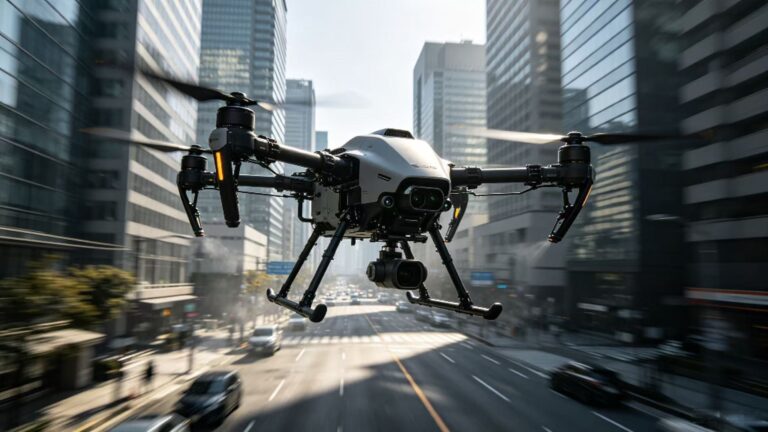
Cette longueur d'onde est utilisée pour des applications civiles de courte à moyenne portée, dans un rayon de 3 km. Parmi celles-ci, on peut citer : l'évitement d'obstacles par les drones et la topographie aérienne, les systèmes d'alerte périmétrique pour la sécurité des campus, la prévention des collisions dans l'automatisation industrielle, les télémètres laser portables et les capteurs pour la maison connectée.
Produits SunFlaser associés
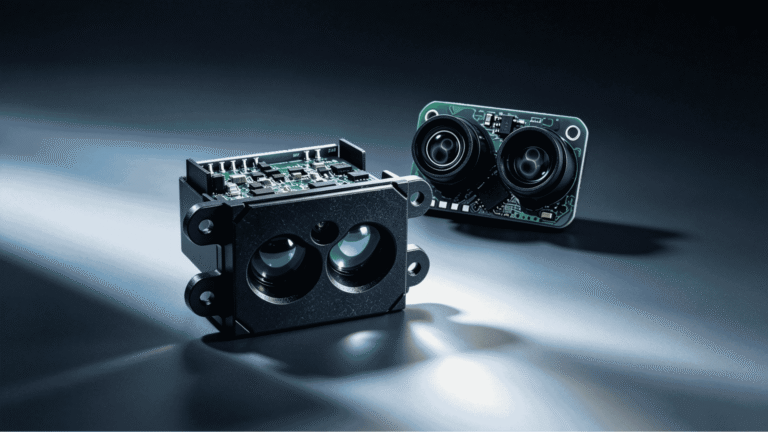
Pour répondre à ces besoins, nous proposons les modules de télémétrie à laser pulsé à semi-conducteur de la série SFA 905 nm, couvrant des portées allant de 1 000 m à 3 000 m :
- SFA1000A/1200A/1500A : Plus précisément, ces modèles se caractérisent par une conception légère et compacte, avec un poids inférieur ou égal à 20 g, ce qui les rend adaptés aux petits drones et aux appareils portables.
- SFA2500A/3000A : De plus, ces modèles à portée étendue atteignent jusqu’à 3 000 m et permettent de mesurer la pénétration dans le verre.
- Série complète : De plus, tous nos modèles sont conçus pour offrir un indice de protection IP67, une résistance aux chocs de 1 000 g et une plage de température de fonctionnement étendue, allant de -20 °C à +60 °C. Nous proposons également une chaîne d'outils de développement secondaire complète.
II. Laser à état solide de 1 064 nm : leader dans le domaine de la pénétration à longue portée de niveau militaire
Caractéristiques optiques principales
- Tout d'abord, ce laser offre une densité d'énergie exceptionnelle et une très grande capacité de pénétration de l'atmosphère, avec une portée pouvant atteindre plusieurs dizaines de kilomètres.
- De plus, il se caractérise par une faible divergence du faisceau et une excellente directivité.
- Cependant, cela présente un risque très élevé pour la vue : le faisceau traverse directement la cornée et le cristallin, se focalise sur la rétine et provoque des brûlures instantanées.
- De plus, cette technologie se heurte à d'importants obstacles techniques et à des processus de fabrication complexes, ce qui rend son coût nettement plus élevé que celui des produits à 905 nm.
Cas d'utilisation
Cette longueur d'onde est principalement utilisée dans des domaines militaires et à usage spécifique soumis à un contrôle strict. Il s'agit notamment des armes à guidage laser, de l'éclairage de cibles à longue portée, de la reconnaissance sur le champ de bataille, de la surveillance des frontières et des systèmes optoélectroniques embarqués sur des navires.
Produits SunFlaser associés
Pour ces applications exigeantes, nous proposons les illuminateurs laser de la série SFC à 1 064 nm, qui couvrent des portées ultra-longues allant de 2,5 km à 50 km :
- Série SFC-GX : Plus précisément, ce modèle de type « plug-and-play » prend en charge un éclairage à fréquence fondamentale de 20 Hz et offre une précision de codage ≤ 0,2 μs.
- Série SFC-LY : De plus, cette série se caractérise par une conception légère (poids ≤ 800 g), intègre une technologie de cavité à stabilisation thermique dynamique et garantit une stabilité de l'axe optique ≤ 0,03 mrad.
- Série SFC-RB : De plus, cette série de produits robustes de qualité militaire est conforme à la norme GJB150A et fonctionne de manière fiable dans des conditions de températures extrêmes, comprises entre -55 °C et +75 °C.
- Assistance : De plus, nous prenons en charge plusieurs modes de codage, notamment les codes à fréquence précise, les codes à intervalle variable et les codes pseudo-aléatoires. Nous proposons également des interfaces et des paramètres de performance personnalisables en fonction des besoins spécifiques.
III. Laser Er:Glass à 1 535 nm : longueur d'onde idéale pour les applications civiles à longue portée sans danger pour les yeux
Caractéristiques optiques principales
- Tout d'abord, il s'agit d'une longueur d'onde totalement inoffensive pour les yeux : l'énergie laser est entièrement absorbée par la cornée et le cristallin, sans jamais atteindre la rétine. Par conséquent, elle ne provoque aucun dommage, même en cas d'observation directe sans protection.
- De plus, son atténuation atmosphérique est bien inférieure à celle de la longueur d'onde de 905 nm. À puissance égale, sa portée est de 3 à 5 fois supérieure à celle de la longueur d'onde de 905 nm.
- De plus, il allie une grande précision à une grande fiabilité et offre une excellente résistance aux interférences dans des environnements complexes.
- Enfin, cette technologie gagne en maturité et ses coûts diminuent progressivement, ce qui en fait une solution idéale pour la télémétrie civile à longue portée.
Cas d'utilisation
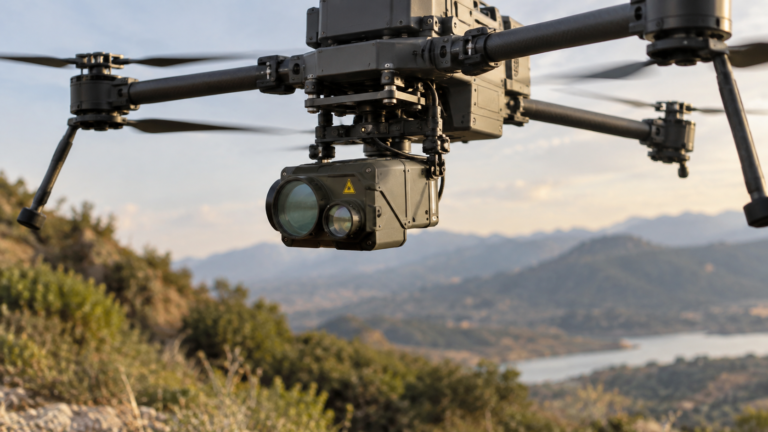
Cette longueur d'onde est donc utilisée dans des applications civiles à longue portée, au-delà de 3 km. Parmi celles-ci, on peut citer : la cartographie aérienne à l'aide de drones de grande taille, l'inspection des lignes électriques, la surveillance des feux de forêt, la localisation lors d'opérations de secours d'urgence, les équipements de plein air haut de gamme et les systèmes optoélectroniques embarqués sur des véhicules.
Produits SunFlaser associés
Pour ces applications, nous proposons les modules de télémétrie laser des séries SFL Micro et SFB à 1 535 nm, couvrant des portées allant de 2,5 km à 20 km :
- Série SFL Micro : Plus précisément, cette gamme se caractérise par une conception extrêmement légère, avec un poids pouvant descendre jusqu'à 34 g, une portée allant de 3 km à 15 km, et convient aux petits drones et aux appareils portables.
- Série SFB : De plus, cette gamme de produits de qualité industrielle et militaire offre une portée allant de 2,5 km à 20 km et prend en charge les fonctions de mesure de distance multi-cibles et de « range-gating ».
- Série complète : De plus, tous les modèles sont certifiés « sans danger pour les yeux » (classe 1), bénéficient d'un indice de protection IP67, fonctionnent dans une large plage de températures allant de -40 °C à +70 °C et sont conformes aux normes environnementales MIL-STD-810G.
 English
  العربية
  Français