

Votre télémètre laser tombe sans cesse en panne ? 90% de personnes sont tombées dans ces trois pièges.
Si vous travaillez dans le domaine de l'intégration industrielle, du développement de drones ou des projets de sécurité, il y a de fortes chances que vous ayez déjà été confronté à cette situation frustrante à un moment ou à un autre.
Vous avez soigneusement choisi un module de télémétrie répondant aux exigences spécifiées en matière de portée et de précision. Pourtant, à peine quelques mois après son installation, il commence à fournir des mesures inexactes, à perdre des données, voire à cesser complètement de fonctionner.
Beaucoup attribueraient d'emblée ces problèmes à la qualité du fabricant. Or, en réalité, 90% des défaillances des modules de télémétrie proviennent de trois pièges cachés liés à leur sélection et à leur utilisation. Aujourd'hui, nous allons examiner ces problèmes en détail sous l'angle des principes optiques et des pratiques d'ingénierie, et vous proposer des conseils concrets pour vous aider à les éviter.
Piège n° 1 : se concentrer uniquement sur la “ plage spécifiée ” lors du choix de la longueur d'onde, tout en négligeant l'adaptabilité à l'environnement et les marges de sécurité
Il s'agit là d'un piège de sélection fondamental qui passe facilement inaperçu. Pour commencer, beaucoup de gens se contentent de regarder “ la portée de mesure ” et choisissent l'option la moins chère, sans tenir compte des différences d'adaptabilité à l'environnement liées à la longueur d'onde. En conséquence, le module devient “ aveugle ” en extérieur par temps de pluie ou de brouillard, et un fonctionnement prolongé à pleine charge accélère son vieillissement.
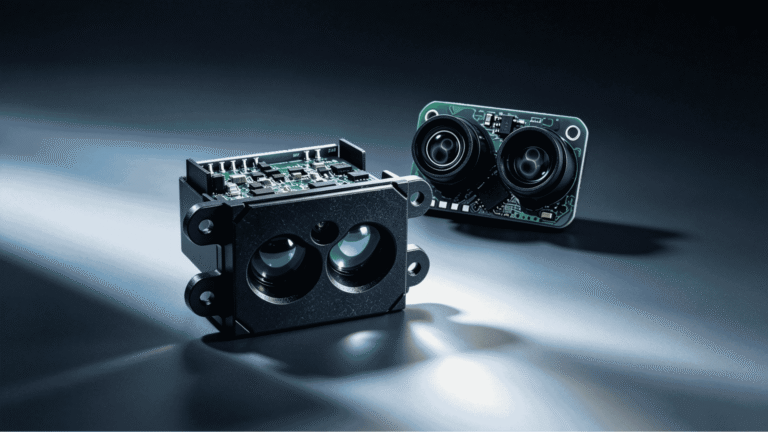
À l'heure actuelle, deux gammes de produits couramment utilisées couvrent diverses applications civiles, et leurs différences de performances découlent essentiellement de leurs caractéristiques optiques :
1. Laser à semi-conducteur de 905 nm
Ses principaux avantages sont son faible coût et sa taille compacte. Cependant, ses inconvénients sont importants. Plus précisément, le coefficient d’atténuation atmosphérique atteint environ 0,35 dB/km. En cas de pluie, de brouillard ou de poussière, l’atténuation de l’énergie peut être de 3 à 5 fois supérieure à celle observée par temps clair, réduisant souvent la portée effective de moitié. De plus, cette bande de fréquences traverse la cornée et atteint la rétine. Par conséquent, augmenter aveuglément la puissance pour étendre la portée entraîne des risques en matière de sécurité et de conformité. Par ailleurs, un fonctionnement prolongé à pleine charge réduit la durée de vie du laser de plus de 40%.
2. Laser Er:verre à 1 535 nm
Ce phénomène est largement reconnu dans le secteur comme la “ bande d’or pour la télémétrie civile à longue portée ”. Plus précisément, il s’inscrit dans le spectre d’absorption forte de la cornée, ce qui signifie que 99% de l’énergie laser est absorbée par la surface cornéenne et ne peut atteindre la rétine. Conformément à la norme CEI 60825-1, l’exposition maximale admissible (MPE) pour les lasers à 1 535 nm atteint 40 fois celle des lasers à 905 nm, offrant ainsi une marge de sécurité extrêmement élevée. De plus, son coefficient d’atténuation atmosphérique n’est que d’environ 0,15 dB/km. À puissance d’émission égale, sa portée effective est de 3 à 5 fois supérieure à celle du laser à 905 nm, et sa dégradation est plus progressive dans des environnements difficiles. De plus, le laser n’a pas besoin de fonctionner en surcharge prolongée, ce qui se traduit par une durée de vie plus de deux fois supérieure à celle des modules équivalents à 905 nm.
✅ Conseil pour éviter cela : Pour les scénarios en intérieur ou en milieu clos à courte portée (moins de 3 km), les modules conformes à la norme de faible puissance de 905 nm peuvent offrir des performances acceptables. Toutefois, pour les applications civiles en extérieur à moyenne ou longue portée et en milieu ouvert, privilégiez la bande de 1 535 nm, sans danger pour les yeux, afin de bénéficier de meilleures performances, d’une durée de vie prolongée et d’une garantie de conformité.
Piège n° 2 : négliger les indices de protection et la résistance aux conditions environnementales, et utiliser des modules destinés au grand public dans des environnements industriels difficiles
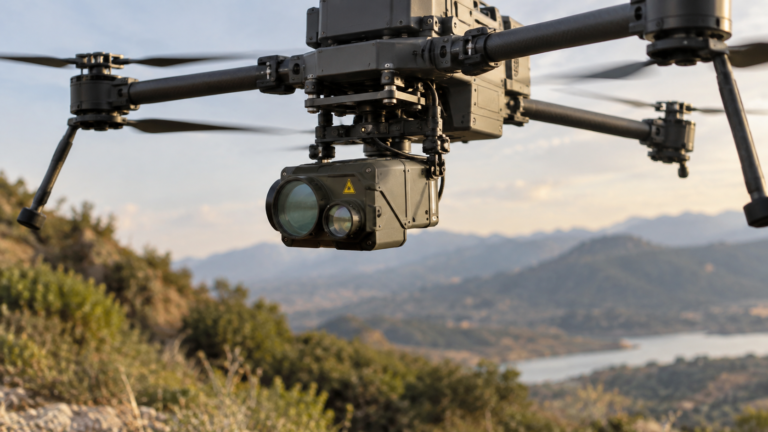
Il s'agit là d'un point de défaillance très courant. En effet, beaucoup de gens consultent la fiche technique et estiment que les paramètres sont “ suffisants ”, puis utilisent directement des modules destinés au grand public ou à un usage commercial dans des environnements exigeants, tels que l'extérieur, les chaînes de production industrielles, les applications embarquées dans des véhicules ou les applications aéronautiques. Dans de telles conditions, les défaillances sont inévitables.
Deux idées fausses très répandues se distinguent particulièrement :
1. Une protection insuffisante contre la poussière et l'eau entraîne une “ mort à petit feu ” du module
De nombreux modules à bas prix n’offrent qu’un indice de protection IP40, voire aucune protection, ce qui les rend adaptés uniquement à des environnements intérieurs propres. Lorsque vous les utilisez à l’extérieur dans des conditions poussiéreuses ou humides pendant de longues périodes, la poussière pénètre dans le module et contamine les lentilles optiques, tandis que l’humidité corrode les broches des circuits. Au mieux, cela réduit la puissance optique et entraîne une dérive de la portée ; au pire, cela peut provoquer des courts-circuits et détruire complètement le module.
Dans les environnements industriels en extérieur, le module doit présenter un indice de protection IP67 ou supérieur : il doit être totalement étanche à la poussière et capable de résister à une immersion dans 1 mètre d'eau pendant 30 minutes à température ambiante sans infiltration. Ce n'est qu'ainsi qu'il pourra résister de manière fiable à la pluie, à la poussière, à la condensation et à d'autres conditions difficiles.
2. Une plage de températures inadaptée entraîne une défaillance immédiate dans des environnements extrêmes
Les modules destinés au grand public fonctionnent généralement dans une plage de températures comprise entre 0 °C et +50 °C. Lors des hivers nordiques, où les températures descendent en dessous de zéro, ou lors d’une exposition estivale en extérieur à des températures supérieures à 60 °C, ces modules ont tendance à présenter des défaillances au démarrage, à afficher des données erronées, voire à subir des dommages irréversibles au niveau de leurs composants essentiels.
Un produit véritablement de qualité industrielle doit pouvoir fonctionner dans une large plage de températures allant de -40 °C à +65 °C et passer avec succès des essais rigoureux de cycles thermiques et de chocs thermiques afin de s'adapter aux diverses conditions climatiques des différentes régions.
✅ Conseil pour éviter cela : Avant de procéder au choix, définissez clairement les conditions environnementales de l'application envisagée. Pour les utilisations en extérieur, en milieu industriel, à bord de véhicules ou en vol, optez systématiquement pour des modules de qualité industrielle offrant une large plage de températures et un indice de protection IP élevé. Ne faites pas de compromis sur le coût en utilisant des produits grand public, car les frais de maintenance et de remplacement qui en découleront seront plusieurs fois supérieurs.
Piège n° 3 : pratiques de manipulation inappropriées – les décharges électrostatiques (ESD) et une mauvaise utilisation endommagent directement le module
De nombreux modules de télémétrie ne “ s'usent ” pas, mais “ tombent en panne ” en raison d'une mauvaise manipulation. Pour être plus précis, les modules de télémétrie laser sont des dispositifs optoélectroniques de précision, en particulier l'émetteur laser et le récepteur APD, qui sont extrêmement sensibles aux décharges électrostatiques (ESD), aux fluctuations de tension et à la contamination optique. Une mauvaise manipulation peut causer des dommages irréversibles en un instant.
Trois types courants d'abus dans ce secteur méritent une attention particulière :
1. Dommages dus aux décharges électrostatiques : le “ tueur de puces ” invisible”
L'électricité statique du corps humain peut atteindre 2 000 à 10 000 V, alors que les diodes laser et les photodétecteurs sont des composants sensibles aux décharges électrostatiques (ESD) dont la tension de résistance n'est généralement que de quelques centaines de volts. De nombreux ingénieurs touchent les broches des modules à mains nues lors du débogage ou branchent/débranchent les connecteurs alors que l'appareil est sous tension. Une décharge électrostatique instantanée peut endommager la puce : le module peut continuer à fonctionner dans un premier temps, mais des dommages latents se sont déjà produits, ce qui réduit considérablement sa durée de vie et entraîne par la suite des pannes fréquentes.
2. Surtension d'alimentation : provoque la destruction immédiate des circuits
Chaque module dispose d'une plage de tension d'alimentation spécifique – par exemple, un module standard de 3,3 V ± 0,1 V. Par souci de commodité, beaucoup de gens le connectent directement à une alimentation de 5 V ou utilisent une alimentation de mauvaise qualité présentant une ondulation excessive. Au mieux, cela entraîne des anomalies de mise au point et des données erratiques ; au pire, cela provoque la destruction immédiate du circuit d'entraînement et du laser, causant des dommages irréversibles.
3. Encrassement de la fenêtre optique : dégradation irréversible des performances
Le fait de toucher la lentille optique à mains nues laisse des empreintes digitales et de la sueur qui attaquent le revêtement antireflet, réduisant ainsi la transmittance. L'utilisation de mouchoirs en papier ordinaires ou de vêtements pour essuyer la lentille provoque des rayures optiques, ce qui réduit considérablement la puissance d'émission et de réception, entraînant une diminution de la portée, une dégradation de la précision, voire une défaillance totale.
✅ Conseils pour éviter cela :
- Portez toujours un bracelet antistatique et déchargez l'électricité statique de votre corps avant de manipuler le module ;
- Respectez scrupuleusement les spécifications d'alimentation indiquées dans la fiche technique ; nous vous recommandons d'ajouter des circuits de régulation de tension et de protection contre les surintensités ;
- Nettoyez la fenêtre optique uniquement à l'aide d'un soufflet propre afin d'éliminer la poussière en surface. Pour les taches tenaces, essuyez délicatement à l'aide d'un coton-tige imbibé d'une petite quantité de mélange d'alcool et d'éther. Ne touchez jamais directement la surface optique avec les doigts.
Conclusion : L'essentiel pour éviter les erreurs réside dans le fait de “ bien choisir + bien utiliser ”.”
En substance, le taux de défaillance élevé des modules de télémétrie laser s'explique par un “ choix inadapté au contexte ” et des “ pratiques d'utilisation non conformes ”. Pour garantir un fonctionnement stable à long terme, gardez à l'esprit ces trois principes fondamentaux :
- Sélectionner la longueur d'onde en fonction du scénario : pour les applications civiles en extérieur, à moyenne et longue portée et en milieu dégagé, privilégier la bande de 1 535 nm, sans danger pour les yeux ;
- Sélectionnez le niveau de performance en fonction de l'environnement : pour les applications industrielles, en extérieur et embarquées, optez pour des produits de qualité industrielle dotés d'un indice de protection IP67 et d'une large plage de températures allant de -40 °C à +65 °C ;
- Utilisez l'appareil conformément aux spécifications : mettez en place une protection ESD adéquate, alimentez l'appareil selon les spécifications et entretenez correctement la fenêtre optique.
En tant que fabricant national spécialisé dans les sources lumineuses et modules de télémétrie laser, SunFlaser propose une gamme complète de modules de télémétrie Er:Glass à 1 535 nm. Tous les modèles sont conformes aux normes de sécurité oculaire de classe 1, bénéficient d’un indice de protection IP67 et fonctionnent de manière stable sur toute la plage de températures comprise entre -40 °C et +65 °C. Avec une plage d'énergie allant de 20 μJ à 10 mJ, nos produits s'adaptent à tous les scénarios, des micro-appareils portables aux applications industrielles à longue portée. Nous fournissons une assistance technique complète et des conseils d'utilisation pour vous aider à éviter les pièges opérationnels liés au 99%.

 English
  العربية
  Français