
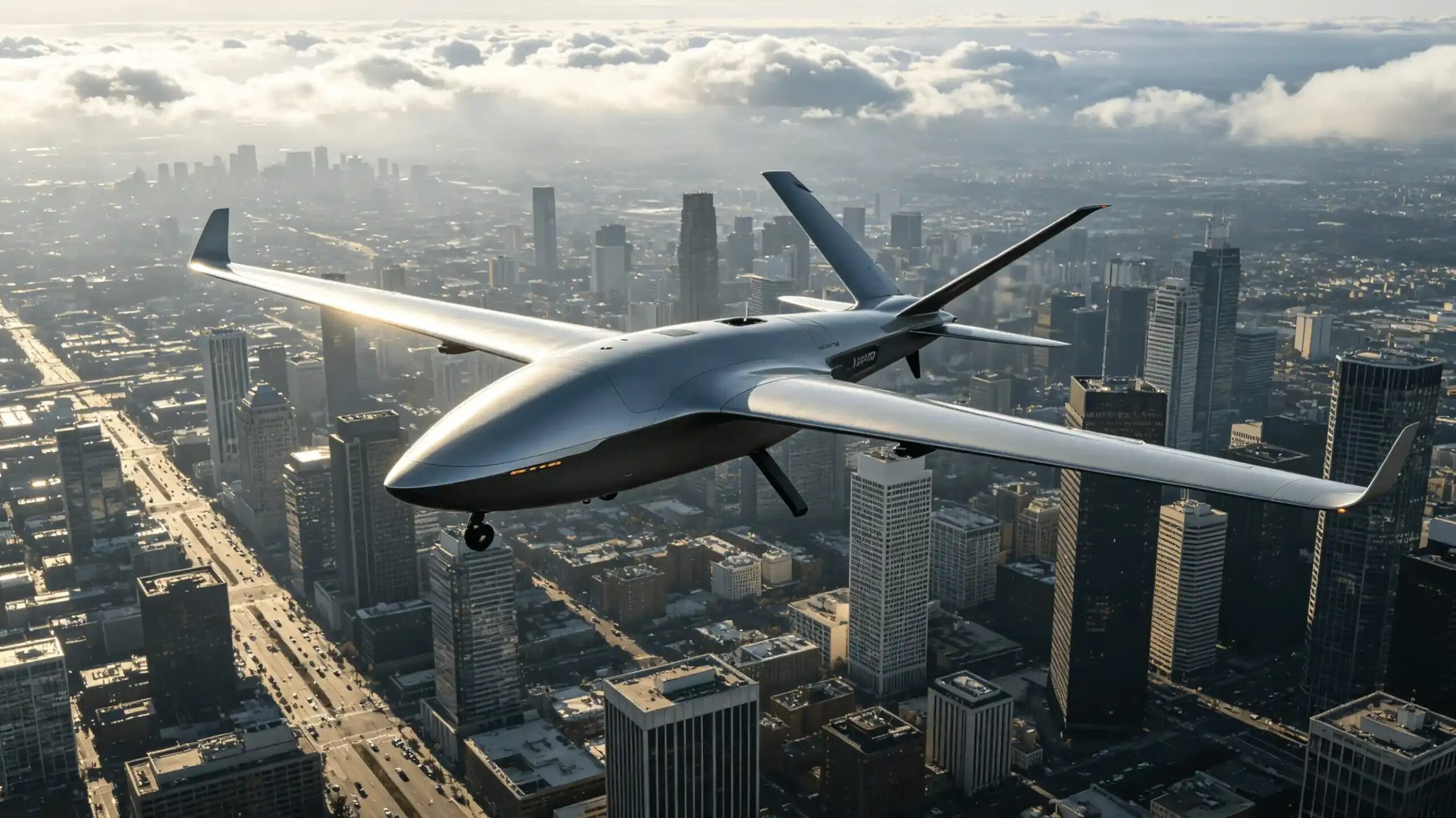

From Measuring with Rulers to Clairvoyant Eyes: The Evolution of the Laser Ranging Industry
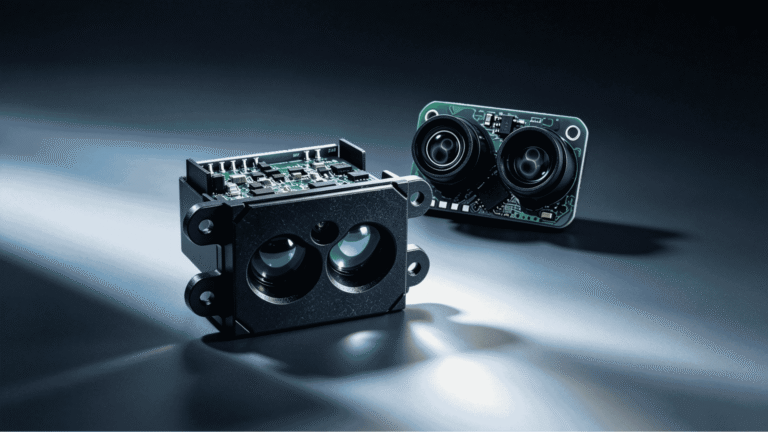
To begin with, rulers and ropes once served as humanity’s primary tools for gauging the world. However, over the past sixty‑plus years, laser ranging has rewritten the way humans “see distance” – evolving from thousand‑pace estimations to millimetre‑level precision, and from bulky instruments to thumbnail‑sized modules. Today, we use the SunFlaser SFL0315 compact laser ranging module as a case study to understand the current development trajectory and future direction of the ranging industry.
I. The Evolution of Measurement: From Human Effort to the Speed of Light
To begin with, humanity’s pursuit of distance measurement has always revolved around four core goals: farther, faster, more accurate, and safer.
- The Pre‑Laser and Instrument Era – Human‑Dependent, Experience‑Driven
Firstly, pacing, rope measuring, and pole surveying produced large errors, offered low efficiency, and made long‑distance measurement nearly impossible.
Secondly, optical theodolites and total stations improved precision. However, they remained bulky, complex to operate, and dependent on trained professionals.
Consequently, these methods could not measure far, fast, accurately, or portably.
- The Dawn of the Laser Era – 1960s, Ranging Revolutionised
To continue, the laser was born in 1960, and the first laser rangefinder emerged the following year. Consequently, this officially ushered the ranging industry into the age of light speed.
In terms of principle breakthrough, TOF (Time‑of‑Flight) technology works by emitting a laser pulse, allowing it to reflect off the target, then receiving the echo, and calculating distance as (speed of light × time) / 2.
In the early stages, these devices primarily served military purposes. They were bulky, consumed high power, and predominantly used 1064nm wavelength – which was not sufficiently eye‑safe.
- Civilian Proliferation – From Niche Professional Tool to Everyday Utility
Moving on, the 1990s saw semiconductor lasers mature. As a result, handheld rangefinders entered construction, home renovation, and surveying.
Furthermore, post‑2000, 905nm lasers became widespread, costs dropped, and UAVs and robots began to integrate ranging modules.
However, key pain points remained: eye‑safety risks, weak penetration in fog and rain, and limited long‑range performance.
- The Next‑Generation Leap – 1535nm Eye‑Safe Laser Becomes Mainstream
Over the past decade, the industry has undergone a critical upgrade. Specifically, the 1535nm Er:Glass laser has become the standard for high‑end ranging. It simultaneously hits two ideal windows:
First, it offers a low‑loss atmospheric window – maintaining long‑range transmission even in fog, rain, and bright light.
Second, it provides an eye‑safe window – Class 1, causing no harm from direct viewing, thus making it usable in open scenarios.
Consequently, the compact module represented by the SFL0315 is a typical outcome of this technological upgrade.
II. Technological Iteration: Four Core Upgrades in the Ranging Industry
In essence, the history of laser ranging is a history of continuous evolution in wavelength, principle, size, and integration.
- Wavelength Upgrade – From “Eye‑Damaging” to “Eye‑Safe”
Traditionally, the industry used 905nm / 1064nm wavelengths – power‑limited and difficult to balance long range with safety.
Now, the 1535±5nm wavelength achieves Class 1 eye‑safe certification – consequently, users can deploy it in handheld, vehicle‑mounted, and airborne applications without concern.
SFL0315 highlight: It achieves Class 1 eye‑safe status and range ≥20km – therefore, achieving long distance and safety together.
- Principle Upgrade – From Simple Ranging to Intelligent Multi‑Target Perception
In the early generation, modules offered only single‑shot ranging and remained susceptible to interference.
In modern systems, single‑pulse TOF combines with multi‑target recognition and range gating.
SFL0315 capabilities:
To begin with, it supports single‑shot and continuous ranging (1–10Hz adjustable).
Additionally, it recognises up to 3 targets.
Finally, it features range gating and command self‑diagnostics – ensuring reliable measurements even in complex environments.
- Form Factor Upgrade – From “Equipment” to “Module,” a Miniaturisation Revolution
In the past, rangefinders weighed several kilograms and featured large dimensions.
Now, chip‑scale, modular designs make them embeddable into any device.
SFL0315 specifications:
Firstly, dimensions measure ≤104mm × 61mm × 74mm.
Secondly, weight is ≤191g.
Thirdly, it supports wide‑voltage DC 5–28V and consumes average power ≤2W – thus making it integrable into handheld, vehicle‑mounted, and pod systems.
- Environmental Adaptability Upgrade – From “Laboratory” to “All‑Scenario”
To begin with, operating temperature ranges from -40°C to +60°C.
Furthermore, shock resistance reaches 75g @ 6ms – adapting well to vehicle‑mounted and airborne vibration environments.
Finally, humidity tolerance is ≤80% – making it suitable for most outdoor operations.
III. Industry Landscape: China Is Leading the Next‑Generation Ranging Technology
In the past, high‑end ranging modules were long dominated by overseas brands. However, today, domestically produced 1535nm laser ranging has achieved a technological leapfrog.
- Technology Self‑Reliance
To begin with, the core light source – Er:Glass lasers – is fully in‑house R&D.
Additionally, signal processing employs mature TOF algorithms, multi‑target recognition, and anti‑interference algorithms.
Representative product: modules like the SFL0315 deliver performance comparable to international top‑tier products at a more competitive cost.
- Broad Application Explosion
Furthermore, laser ranging is no longer a niche instrument – instead, it has become a foundational sensing capability for the intelligent world:
Vehicle‑mounted: autonomous driving long‑range perception, vehicle‑mounted optoelectronic pods.
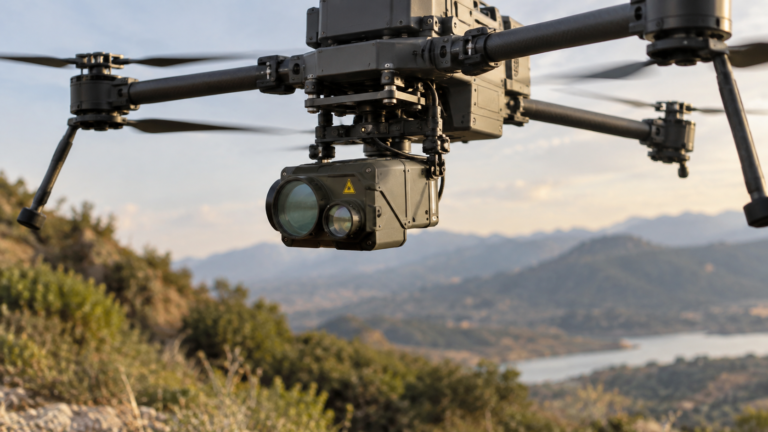
Airborne: UAV surveying, power line inspection, security monitoring.
Handheld: outdoor ranging, forestry surveying, engineering measurement.
Industrial: robot obstacle avoidance, logistics positioning, high‑precision inspection.
- Future Trends – Smaller, Farther, Smarter
Ultra‑miniaturisation: modules moving towards centimetre‑scale and gram‑level.
Further and higher: range continues to break through, with precision approaching sub‑metre levels.
Multi‑sensor fusion: ranging + imaging + AI recognition – integrated perception.
Ultra‑low power: standby ≤0.2W – enabling long‑term unattended operation.
IV. Back to the Product: Why Is the SFL0315 a Microcosm of the Industry?
To conclude, this compact laser ranging module encapsulates the current high maturity of the laser ranging industry:
Safety: 1535nm Class 1 – harmless to the human eye.
Performance: 20km range, ±1.5m accuracy, multi‑target, range gating, self‑diagnostics.
Ease of use: ultra‑compact size, lightweight, wide‑voltage, low power.
Reliability: wide‑temperature, vibration‑resistant, shock‑resistant – high‑quality assurance.
Consequently, it is no longer just a “rangefinder” – instead, it is a ranging core that can be embedded into a wide variety of devices.
Closing Remarks
In summary, we have evolved from ropes and tapes to lasers, and from kilometre‑scale to metre‑scale and sub‑metre‑scale. Ultimately, the essence of the ranging industry is humanity’s relentless breakthrough in spatial perception.
Furthermore, the new‑generation technology represented by the 1535nm eye‑safe laser is making ranging safer, smaller, more powerful, and more accessible than ever before. In the future, laser ranging will embed itself – like a chip – in smartphones, cars, drones, and robots, silently helping us see every inch of the world with clarity.
 English
  العربية
  Français